Invoice Payment Methods Compared: Card vs ACH vs Bank Transfer (2026 Fees & Speed)
Quick answer
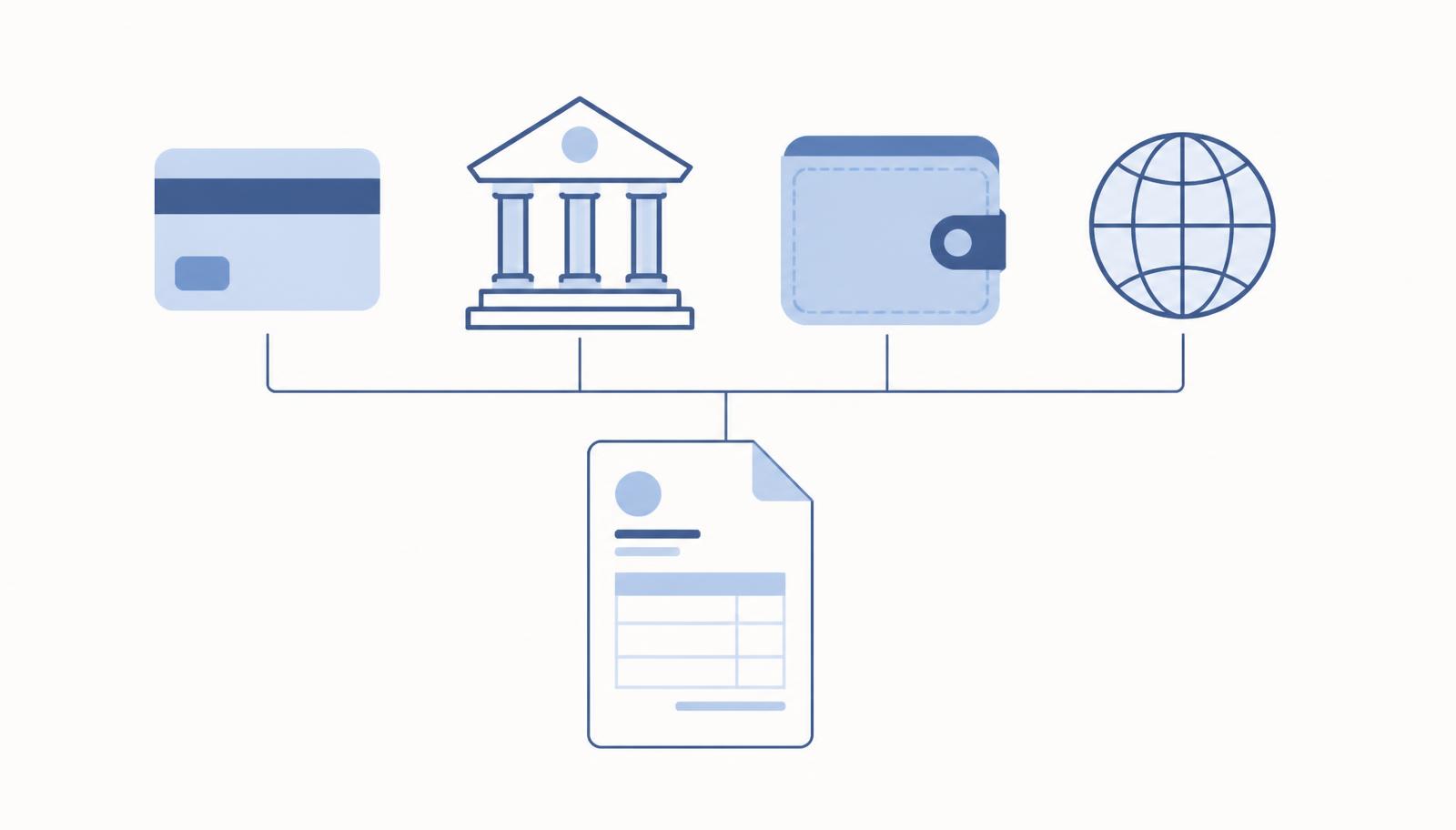
The best invoice payment method depends on invoice size and client type. Cards (1.4%–2.9% + fixed fee) win on speed and convenience for invoices under about $2,000. ACH and SEPA bank debit (0.5%–0.8%, often capped at $5) win on cost for larger recurring invoices. Wire transfers suit cross-border invoices above ~$10,000. Cheques are the slowest and most expensive once you count admin time. In practice, offering one instant online option plus one low-cost bank option gets you paid fastest without eroding margin.
Why the payment method you offer changes how fast you get paid
Most invoicing advice focuses on wording, terms and reminders. Those matter — we cover them in our guides to the best invoice reminder schedule and how to ask for payment politely. But the single biggest lever is often mechanical: how much friction sits between your client deciding to pay and the money actually leaving their account.
Every extra step is a chance for the invoice to slide into next week's pile. A "Pay now" button takes about 40 seconds. A bank transfer means opening a banking app, keying in an IBAN, copying a reference, and approving with a second factor — perhaps five minutes, and often deferred to a batch payment run. A cheque needs printing, signing, posting and clearing.
The research is consistent on the direction: invoices that carry an online payment option are paid meaningfully sooner than those that only carry bank details. We collected the numbers in our 2026 late payment statistics roundup, and the mechanism is simple — you remove the gap between intent and action.
Invoice payment methods compared (fees, speed, best use)
Typical 2026 rates for small businesses and freelancers using mainstream processors. Your exact pricing depends on provider, country, card type and volume — always confirm on the provider's own pricing page.
| Method | Typical fee | Time to cash | Best for | Main drawback |
|---|---|---|---|---|
| Credit / debit card | ~1.4%–2.9% + $0.25–$0.30 | Instant auth, payout in 1–3 days | Invoices under $2,000, new or one-off clients | Fee scales with invoice size; chargeback risk |
| ACH debit (US) | ~0.8%, commonly capped ~$5 | 2–5 business days | Recurring and larger domestic invoices | Slower; returns (NSF) possible for ~2 months |
| SEPA Direct Debit (EU) | ~€0.35 flat, or ~0.8% capped | 2–5 business days | Retainers and subscriptions in the euro area | Mandate setup; long refund window |
| Bacs Direct Debit (UK) | ~1% capped ~£2 | 3 working days | UK recurring billing | Setup and mandate admin |
| Manual bank transfer / wire (domestic) | $0–$25 flat | Same day to 2 days | Large invoices from trusted clients | Manual reconciliation; missing references |
| International wire (SWIFT) | $15–$50 + FX spread of 1%–3% | 1–5 business days | Cross-border invoices over ~$10,000 | Hidden FX cost; intermediary bank deductions |
| Digital wallets (Apple Pay, Google Pay, Link) | Same as underlying card | Instant auth | Mobile-first clients; reducing checkout drop-off | Still card economics |
| PayPal / marketplace balances | ~2.9%–3.49% + fixed; +1.5% cross-border | Instant to balance | Consumer and micro-business clients | Highest all-in cost; dispute holds |
| Cheque | "Free" + 10–20 min admin per cheque | 1–3 weeks including post and clearing | Legacy enterprise A/P departments only | Slowest by a wide margin; easily "lost" |
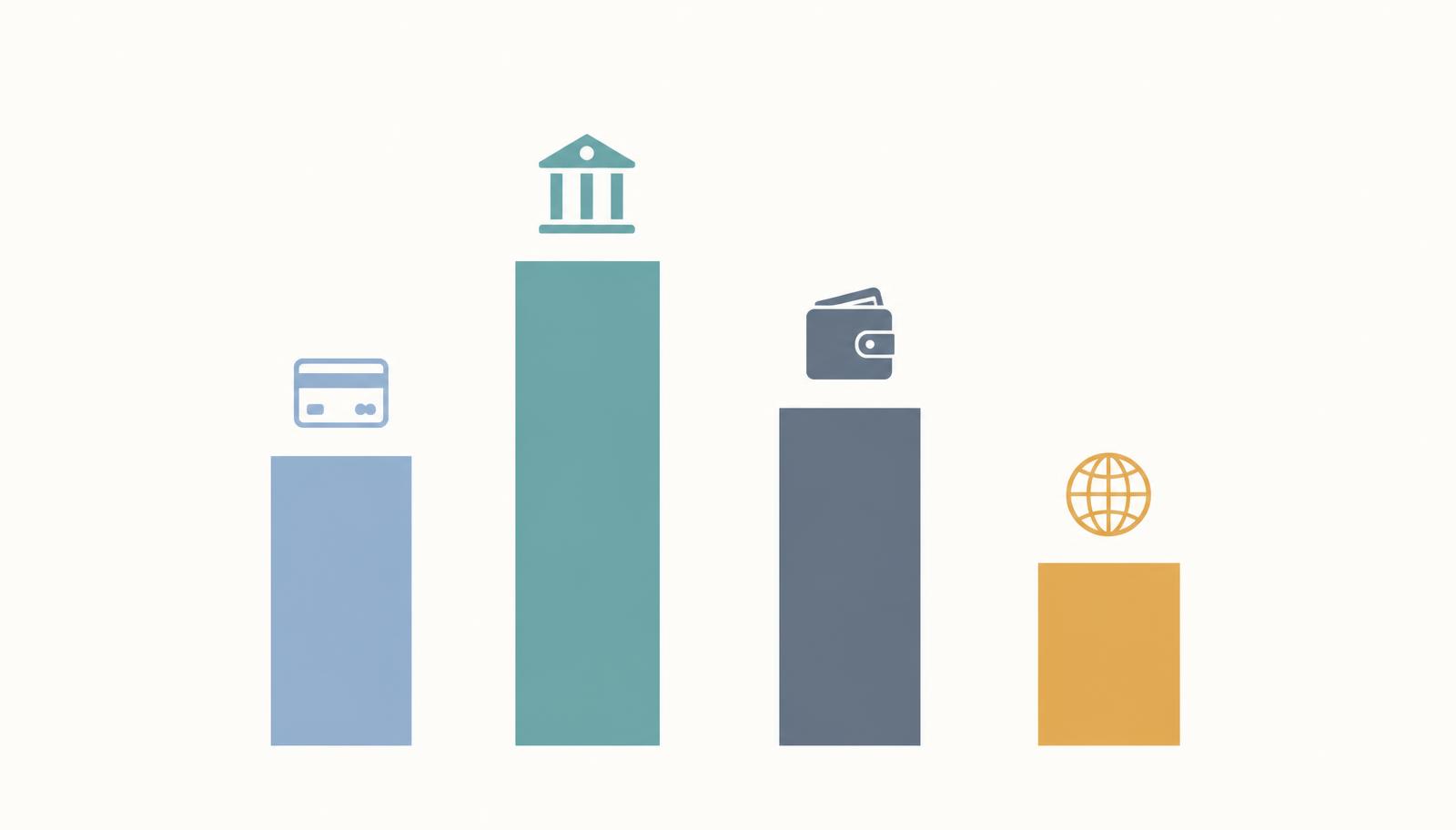
Read that table as a trade-off curve rather than a ranking: cards buy speed with a percentage fee, bank debits buy cost savings with a few days of delay, and manual methods look free only until you price your own reconciliation time.
The math: when a card fee is cheaper than waiting
The instinct is to avoid processing fees. But a fee is a one-off cost, while late payment is a recurring one. Compare them properly.
Cost of a card fee: invoice × fee rate. On a $3,000 invoice at 2.9% + $0.30, that is $87.30.
Cost of waiting: invoice × (annual cost of capital ÷ 365) × extra days, plus your admin time chasing it. At a 12% cost of capital, $3,000 held for 30 extra days costs about $29.60 in financing — plus, realistically, 45 minutes of chasing. If your effective hourly rate is $80, that is another $60. Total: ~$90, and you still don't have the money.
So at typical freelance economics, a card fee roughly breaks even against one extra month of delay — and wins outright once you count the invoices that never get paid at all. Where the math flips is on large invoices: 2.9% of $30,000 is $870, and no amount of admin time justifies that. That is exactly the size band where ACH, SEPA or a plain bank transfer belongs.
Use our payment calculator to run the numbers on your own invoice sizes, and see how DSO is calculated if you want to track the improvement over time.
Credit and debit cards
Cards are the default "Pay now" experience. The client clicks a link in the invoice, enters card details or uses a saved wallet, and the payment authorises immediately. Funds typically land in your bank account in one to three business days.
When cards are the right call
- Invoices below roughly $2,000, where the percentage fee is small in absolute terms.
- First-time clients you have no payment history with.
- Anything you want paid the same day it is sent.
- Clients who like to put business spend on a rewards card — some will actively prefer it.
What to watch
- Chargebacks. A client can dispute a card payment for months afterwards. Keep signed scopes, delivery evidence and email approvals. Our freelance contract guide covers the clauses that hold up.
- Surcharging is regulated. Passing the fee to the client is banned or capped in many jurisdictions (it is prohibited for consumer cards across the EU and UK, and restricted in several US states). Check locally before adding a "card fee" line.
- Fee stacking on cross-border cards. Non-domestic cards usually add ~1% plus currency conversion.
For step-by-step setup, see our dedicated guide on how to accept credit card payments on invoices.
ACH, SEPA and Bacs bank debit
Bank debit pulls funds directly from the client's account after they authorise a mandate once. It is the workhorse of recurring billing because the cost is near-flat regardless of invoice size.
| Scheme | Region | Typical settlement | Return window |
|---|---|---|---|
| ACH debit | United States | 2–5 business days (same-day ACH available) | 2 business days for most returns; up to 60 days for unauthorised consumer debits |
| SEPA Direct Debit Core | Euro area | 2–5 business days | 8 weeks no-questions-asked; 13 months if unauthorised |
| SEPA B2B | Euro area (business only) | 2–3 business days | No refund right after settlement |
| Bacs Direct Debit | United Kingdom | 3 working days | Indemnity claims possible indefinitely in theory |
The long refund windows are the real catch. For subscription-style work, that risk is acceptable; for a single large project payment from an unknown client, it is not. If you bill the same clients every month, pair bank debit with our recurring invoice setup guide and retainer invoicing schedule.
Manual bank transfer and wires
Still the default in much of B2B, especially above five figures. There is no percentage fee, settlement is quick domestically, and there is no chargeback mechanism. The costs are hidden elsewhere:
- Reconciliation. Payments arrive without a clear reference, in part amounts, or from an entity name that does not match the client. Put your invoice number in the payment reference field instruction, in bold, directly beside the bank details.
- No enforcement. Nothing pulls the money — the client has to act. This is where a written cadence matters; use the reminder schedule builder to plan follow-ups before the invoice is even sent.
- FX on international wires. The visible $25 fee is rarely the real cost. A 2% spread on a $20,000 invoice is $400. Quote in your own currency, or use a multi-currency account and invoice in the client's.
Always show both an IBAN/SWIFT set and local rails (ACH routing, UK sort code, SEPA IBAN) if you bill across borders — clients will choose the cheaper local option and you will get paid sooner.
Digital wallets and pay-by-bank
Apple Pay, Google Pay and one-click wallets do not change your economics — they ride on card rails — but they materially reduce abandonment on mobile because the client never types a card number. If your invoice pay page supports them, turn them on.
Pay-by-bank (open banking) is the interesting newer option: the client is redirected into their own banking app, approves a pre-filled payment, and the funds arrive over instant rails. Fees are typically flat and low, settlement can be near-instant, and there is no chargeback. Availability is strongest in the UK and EU, growing in the US. It is worth testing for mid-size invoices where card fees sting but you still want one-click convenience.
PayPal, wallets and marketplace balances
PayPal is convenient and familiar, especially for smaller and consumer-adjacent clients. It is also usually the most expensive option once cross-border and conversion fees stack. Two practical warnings: account holds can freeze funds during a dispute, and money sitting in a balance is not money in your bank. If you use it, sweep to your bank account weekly and keep it as a secondary option, not your primary.
Cheques and why they still exist
Some enterprise accounts payable departments genuinely cannot pay any other way. Accept them when the client is large enough to be worth the friction, but treat the timeline honestly: a cheque cut on day 30 might clear on day 45. Build that into your terms rather than pretending the invoice is late. And ask, once, whether they can enrol you as an ACH vendor — many can, they just never offer.
How many payment options should you offer?
Two or three. More is not better — choice paralysis is real, and every option is another reconciliation path you have to maintain.
| Your situation | Recommended stack |
|---|---|
| Freelancer, invoices under $2,500 | Card / wallet "Pay now" + bank transfer as backup |
| Agency, project invoices $2,500–$25,000 | Bank transfer primary + card for deposits and small change orders |
| Monthly retainers | ACH / SEPA / Bacs mandate primary + card fallback on failure |
| International clients | Local rails in the client's country + card; avoid SWIFT below $10k |
| Enterprise clients | Whatever their A/P portal supports — ask during onboarding |
Agree the method during onboarding rather than at invoice time. Our vendor onboarding checklist lists the questions to ask before you start work — including who approves invoices and what the payment run schedule is.
Setting up payment methods on your invoices
- Decide your default per client segment using the table above. Write it into your standard terms.
- Put the payment option above the fold. A "Pay now" button in the first screen of the invoice, not buried under line items.
- Include full bank details anyway — IBAN, SWIFT/BIC, account and routing numbers, legal entity name, and the required payment reference.
- State the terms unambiguously. "Net 30 — due 15 May 2026" beats "Net 30". See our Net 30 explainer for the wording that avoids disputes.
- Add late fee language where enforceable, and check what you can charge with the late payment fee calculator.
- Automate the follow-up so the invoice chases itself. See automatic invoice reminders.
- Reconcile weekly and keep an A/R aging report so nothing quietly ages into bad debt.
You can produce a compliant invoice with payment details and a due date in a couple of minutes with our free invoice generator, or start from one of the invoice templates.
Six mistakes that cost people money
- Offering only bank transfer on small invoices. You save 2.9% and lose three weeks.
- Offering only cards on large invoices. A 2.9% fee on a $40,000 invoice is a staff day's revenue.
- Surcharging where it is illegal. Fines and chargeback disputes follow. Build the cost into your rate instead.
- Omitting the payment reference instruction. Unmatched payments look unpaid, and you chase clients who already paid — the fastest way to damage a relationship.
- Ignoring FX spread. The headline wire fee is the small part of an international payment's cost.
- Changing bank details by email. This is the most common invoice fraud vector. Never send new details in an email thread; confirm by phone on a known number, and tell clients you will never change details by email.
Security and fraud basics
Invoice redirection fraud — where an attacker intercepts an invoice and swaps the bank details — costs businesses billions annually and targets exactly the workflow described in this article. Three cheap defences: send invoices as links to a hosted, access-controlled page rather than editable attachments; state on every invoice that your bank details never change without a phone confirmation; and reconcile against your own records weekly so a missing payment surfaces in days, not months. Card and bank-debit rails add their own protection because the client is authorising into a system you control rather than typing details you sent them.
External references worth bookmarking: the FBI IC3 business email compromise guidance, and the European Payments Council for SEPA scheme rules.
Payment methods by region
Which rails your clients actually use is a geography question as much as a preference question. Offering the wrong local option is a quiet cause of delay: the client intends to pay, but the route you gave them is inconvenient in their country, so the invoice waits for the next payment run.
| Region | Dominant B2B rail | Fast option | Notes |
|---|---|---|---|
| United States | ACH; cheques still common in enterprise A/P | Cards, same-day ACH, RTP/FedNow | Ask to be enrolled as an ACH vendor during onboarding |
| United Kingdom | Faster Payments bank transfer | Pay-by-bank (open banking), cards | Transfers usually arrive within minutes, not days |
| Euro area | SEPA Credit Transfer | SEPA Instant, cards | SEPA Direct Debit B2B removes the 8-week refund right |
| Canada | EFT and Interac | Cards | Cheques persist in mid-market accounts payable |
| Australia / NZ | Bank transfer via BSB/PayID | PayID, cards | PayID transfers are effectively instant |
| Cross-border | SWIFT wire | Multi-currency local rails | Local receiving details beat SWIFT on both cost and speed |
The practical rule: if you invoice a country regularly, get local receiving details there. A US client paying a US account number, or an EU client paying an IBAN in their own currency, removes both the FX spread and the mental friction of an "international" payment.
A three-question decision framework
Rather than memorising the tables, run any invoice through three questions.
- How big is it? Under about $2,000, default to a card or wallet link — the fee is small and speed is worth more. Over about $10,000, default to a bank rail; percentage fees stop being rational.
- Will you bill this client again? If yes, invest once in a bank-debit mandate or saved payment method. Recurring clients are where automation compounds; see the recurring invoice guide.
- How much do you trust them? New client, no history, work delivered up front? Take a deposit on a card before you start, and keep the balance on whatever rail suits the size. Our piece on upfront payments versus milestones covers the structures that work.
Two invoices to the same client can legitimately use different methods. A $600 change order goes on a card; the $28,000 project milestone goes by transfer. Nothing about your setup has to be uniform.
Reconciliation: the part everyone underestimates
Accepting money is easy. Knowing which invoice each payment belongs to is where hours disappear, and it is the reason "free" methods are rarely free.
- One reference format, everywhere. Use your invoice number verbatim, printed next to the bank details with an explicit instruction. Consistency matters more than the format itself — see invoice numbering best practices.
- Match weekly, not monthly. A weekly pass keeps unmatched payments to a handful you still remember. Monthly means archaeology.
- Handle part payments explicitly. Record the amount received against the invoice rather than marking it paid or leaving it untouched; otherwise your aging report lies to you.
- Expect entity-name mismatches. Large clients pay from a shared treasury account. Note the paying entity on the client record the first time you see it.
- Close the loop with a receipt. Send one automatically on payment — it prevents the "did you get it?" thread and creates a clean record. The distinction matters for tax; see invoice vs receipt.
If a payment stays unmatched, treat it as outstanding and work it like any other case — our guide to the outstanding invoice lifecycle sets out the escalation path, and A/R best practices covers the routine around it.
Frequently asked questions
What is the cheapest way to accept invoice payments?
Bank debit (ACH, SEPA or Bacs) is the cheapest scalable option, typically 0.5%–1% with a cap of a few dollars, so the cost stops growing on large invoices. A manual bank transfer is nominally free, but reconciliation time and slower payment often make it more expensive overall.
What is the fastest way to get an invoice paid?
A card or wallet payment link on the invoice itself. Authorisation is instant and funds settle in one to three business days. Pay-by-bank (open banking) is comparably fast where available and usually cheaper.
Should I pass credit card fees on to my clients?
Usually no. Surcharging consumer cards is prohibited in the EU and UK and restricted in several US states, and it creates friction at the exact moment a client is about to pay. Price the ~2%–3% into your rates instead.
Is ACH or a wire better for a $15,000 invoice?
Domestically, ACH is cheaper and settles in a few days; a wire costs $15–$30 but can settle same-day. If the client is trusted and timing is not urgent, ACH. If you need funds this week, a wire.
How long does an ACH payment take to clear?
Standard ACH settles in two to five business days; same-day ACH is available for an extra fee. Returns for insufficient funds usually appear within two business days, though unauthorised consumer debits can be returned for up to 60 days.
Can I accept international payments without a foreign bank account?
Yes. Card processors handle cross-border payments automatically, and multi-currency accounts let you hold local receiving details in several countries. Both are cheaper than a SWIFT wire once you account for the FX spread.
What payment details must appear on an invoice?
Your legal entity name, bank account identifiers (IBAN and BIC, or account and routing number), the required payment reference — normally your invoice number — the currency, and an explicit due date. See our invoice requirements checklist for the full list.
Do payment links actually get invoices paid faster?
Yes, consistently. Removing the manual entry step compresses the gap between a client deciding to pay and completing the payment, which is where most delay accumulates.
Is PayPal a good option for business invoices?
It works, but it is typically the most expensive at 2.9%–3.5% plus cross-border and conversion fees, and balances can be held during disputes. Treat it as a secondary option for clients who insist on it.
What should I do when a client says "we only pay by cheque"?
Accept it, but ask once whether their accounts payable team can enrol you for ACH or bank transfer — many can. Then build the extra one to three weeks of clearing time into your due date and reminder schedule rather than treating every cheque as a late payment.
How many payment methods should a small business offer?
Two or three: one instant online option (card or pay-by-bank) and one low-cost bank option, plus whatever a specific enterprise client's accounts payable system requires.
Next steps
Pick your default method per client segment, put a payment option in the first screen of every invoice, and automate follow-up so nothing depends on you remembering. If you want the whole loop in one place — invoice, payment link, reminders and an aging view — create a free account and send your first invoice in a few minutes.
Related reading: DSO, A/R aging, and dunning in our invoicing glossary.