Late Payment Statistics 2026: The Data Behind Unpaid Invoices
Late payments are the single biggest cash flow problem facing small businesses in 2026. Around half of all B2B invoices worldwide are paid late, tens of billions of dollars sit trapped in unpaid receivables at any given time, and the average small business loses several weeks each year chasing money it has already earned. This guide pulls together the most-cited late payment statistics from Atradius, Intuit QuickBooks, Xero, the U.S. Federal Reserve, and the UK Federation of Small Businesses — with sources, years, and what each number actually means for your business.
Quick Answer: The Late Payment Problem in 3 Numbers
In 2024–2025, roughly 48% of B2B invoices were paid late (Atradius Payment Practices Barometer). The average small business is owed $78,355 in unpaid invoices at any given time (Intuit QuickBooks, 2024 U.S. data). Cash flow problems — driven mostly by late payments — are cited as the #1 reason 82% of small businesses fail (U.S. Bank cash flow study, widely referenced through 2025).
Why Late Payment Statistics Matter
Every founder, freelancer, and finance lead has a gut feeling that clients pay slowly. Statistics turn that feeling into a lever. Once you can quantify late payments — how many, how late, how much — you can build a repeatable system to reduce them. The numbers below are the ones we use when we help operators benchmark their own DSO, size their AR aging buckets, and prioritise which invoices to chase first.
All figures below are sourced from published, methodologically transparent research. Where studies disagree, we show the range rather than cherry-pick.
How Common Are Late Payments? Global Rates
Late payments are effectively the default state of B2B commerce, not the exception.
- 48% of the total value of B2B invoices was paid late in 2024, according to the Atradius Payment Practices Barometer — a figure that has held between 45% and 55% across every region Atradius surveys since 2019.
- 55% of invoices are paid late in the United States, per the 2024 Atradius Americas report, with an average delay of 28 days beyond the due date.
- 52% of UK invoices were paid late in 2024, according to the Federation of Small Businesses (FSB), with the average small business owed more than £22,000 at any given time.
- Xero Small Business Insights — which analyses anonymised data from millions of real invoices — consistently reports that around 50% of invoices are paid late in the US, UK, Australia, and New Zealand, with average delays of 6–8 days.
- The European Central Bank's SAFE survey (2024) found that 1 in 4 European SMEs cited late payments from customers as a "pressing problem" — the highest reading since 2016.
Bottom line: if half your invoices are being paid late, you're not doing something wrong. You're average. The businesses that win are the ones that drag their late-payment rate down toward 20% through consistent follow-up and structured reminder schedules.
How Late Is "Late"? Average Days Past Due
Being paid one day late is very different from being paid 30 days late. Here's what the data shows about the size of the delay:
| Region | Avg. days past due (2024) | Source |
|---|---|---|
| United States | 28 days | Atradius Americas 2024 |
| United Kingdom | 27 days | Xero Small Business Insights, Q4 2024 |
| Western Europe | 22 days | Atradius PPB Europe 2024 |
| Asia (developed) | 19 days | Atradius PPB Asia 2024 |
| Australia / NZ | 6–7 days | Xero SBI 2024 |
The pattern is remarkably stable: most late invoices settle within 30 days of the due date. It's the long tail — the 10–15% of invoices that go 60, 90, or 120+ days past due — that quietly bleed the balance sheet. A standard AR aging report is the single fastest way to spot that tail.
The Cost of Late Payments to Small Business
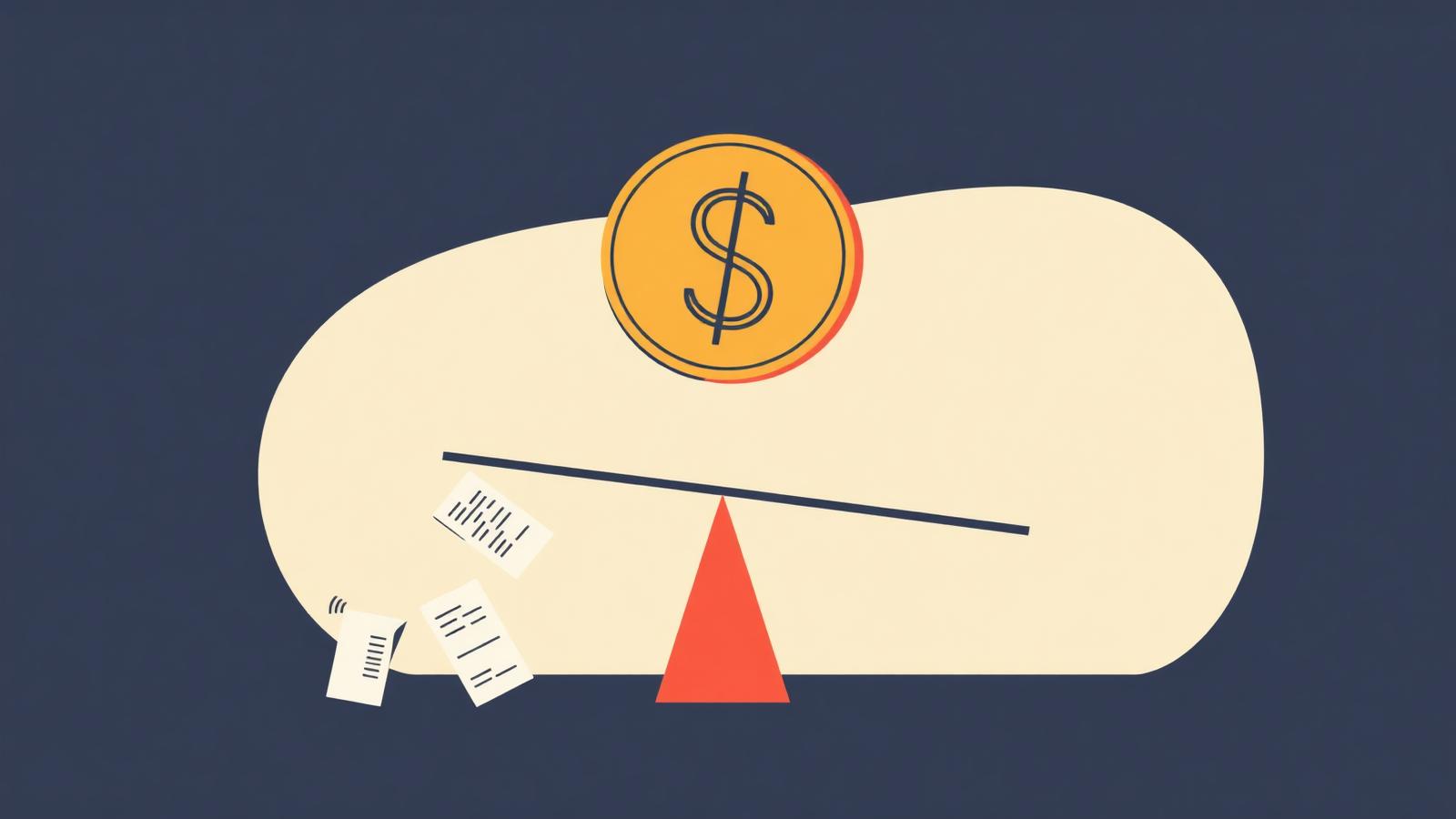
Late payments are not just an inconvenience — they translate directly into lost time, lost revenue, and lost businesses.
Money tied up in unpaid invoices
- $78,355 — the average value of unpaid invoices held by a U.S. small business at any given time (Intuit QuickBooks Small Business Insights, 2024).
- $304 billion — the total amount U.S. small businesses have tied up in accounts receivable at any moment, per QuickBooks aggregate data.
- £684 billion in B2B invoice value is late in the UK at any given time (Sage / Time Finance analysis, 2023, restated 2024).
Time cost of chasing
- 14 hours per week — the average time SME finance staff spend chasing overdue invoices (Sage, "Domino Effect of Late Payments", 2022, referenced through 2024).
- 1.5 days per month — the time a typical freelancer loses to chasing invoices instead of billable work (Xero freelancer survey, 2023).
- Nearly 1 in 3 freelancers report having lost sleep because of unpaid invoices (Freelancers Union, 2023).
Business failure and financial distress
- 82% of small business failures are attributed to cash flow problems, of which late payments are the single largest driver (U.S. Bank study, widely cited by SBA).
- 50,000 UK businesses close every year due to late payments, according to the FSB — an average of ~137 per day.
- Nearly 1 in 4 European SMEs say they have had to delay paying their own suppliers because of late-paying customers (ECB SAFE 2024), creating a chain reaction across the economy.
Financing cost
- Small businesses lose an estimated $3,000–$7,000 per year in interest and financing costs caused by having to borrow to cover cash gaps from late-paying customers (Atradius / Fundbox composite).
- At a 12% short-term rate, every $100,000 held 30 days past due costs roughly $986 in carrying cost — money that would otherwise flow to payroll, tax, or growth.
Use our Late Payment Fee Calculator to see what an individual overdue invoice is costing you in interest and statutory fees.
Who Pays Late? Breakdown by Customer Type
Not all customers are equally guilty. The data shows a clear hierarchy of who to worry about most.
- Large enterprise customers are the worst offenders. Atradius (2024) found that invoices to businesses with 250+ employees were 2.1× more likely to be paid late than invoices to sub-50-employee customers, and stayed overdue on average 40% longer. The reason is usually procedural (procurement queues, PO mismatches), not malicious.
- Government contracts are structurally slow. U.S. federal invoices are subject to the Prompt Payment Act (30 days) but state and local invoices routinely run 60–90 days. UK public-sector data shows around 15% of invoices from central government still paid outside 30-day terms.
- Construction, wholesale, and professional services see the worst payment behaviour. Atradius' 2024 industry breakdown puts these three sectors 5–12 percentage points above the global average for late payments.
- Retail and tech pay fastest, largely because their working-capital cycles are tightly managed and their AP teams are automated.
The practical takeaway: risk-tier your client list. A large enterprise on Net 60 needs a totally different reminder cadence than a small local business on Net 15.
Why Do Clients Pay Late? The Real Reasons
When AP teams and payers are surveyed directly, the reasons cluster into five categories:
- Administrative bottlenecks (≈35% of cases) — invoice missing PO number, wrong billing entity, missing VAT ID, unclear line items. This is the most common reason and the easiest to eliminate. Our invoice requirements checklist covers every field you need.
- Cash flow issues at the paying business (≈25%) — the customer genuinely doesn't have the funds today. Early-warning signs: partial payments, "check is in the mail" replies, silent overdue.
- Disputes over goods or services (≈15%) — real or invented. Almost always driven by unclear scope, missing deliverables, or a communication gap.
- Payment terms being used as free financing (≈15%) — larger customers deliberately stretching payables to improve their own working capital.
- Forgotten / missed invoice (≈10%) — a single reminder usually resolves this immediately.
Notice: only one of these five (cash flow at the payer) is outside your control. The other four are fixable by tightening invoicing hygiene and reminder cadence.
What Works? Evidence-Based Ways to Get Paid Faster
Multiple independent studies converge on the same short list of interventions. Ranked by measured effect on DSO reduction:
1. Send the invoice the same day the work is done
Xero SBI (2024) found that invoices sent within 24 hours of job completion were paid 1.5× faster than invoices sent a week later. Delay in billing predicts delay in payment almost linearly.
2. Offer online payment on the invoice itself
Intuit QuickBooks (2023) reported that invoices with a Pay Now button — Stripe, ACH, card — are paid on average 10 days faster than invoices requiring a bank transfer initiated manually by the client.
3. Use a structured reminder schedule
Sage (2023) tracked SMEs that switched from ad-hoc chasing to a fixed cadence (day-of-issue thank-you, day-before-due friendly nudge, day-1 overdue, day-7 firm, day-14 escalation) and measured a 27% average reduction in DSO within 90 days. Build yours with our Reminder Schedule Builder.
4. State late fees and enforce them
Atradius (2024): businesses that explicitly state late payment interest terms on the invoice see 18% fewer late payments. Actually charging the fee at least once — even symbolically — doubles the effect. See our late payment interest guide.
5. Shorten payment terms
Xero data shows the median payment lag scales with the term: Net 7 is paid in 11 days on average; Net 30 is paid in 37 days; Net 60 is paid in 68 days. Cutting a client's terms from Net 30 to Net 14 doesn't just save 16 days on the term — it typically saves 20+ days in real elapsed time. See Net 30 vs. alternatives.
6. Automate follow-ups
PYMNTS / American Express (2023) found that businesses using automated AR software reduced their DSO by 22% in the first year compared with manual chasers. The single biggest gain came from removing the humans-forgetting-to-send-the-reminder problem.
Late Payments and DSO: What the Numbers Mean for You
Days Sales Outstanding is the metric that captures late payments in a single number. To translate the stats above into benchmarks:
| Industry | Median DSO (2025) | Top-quartile DSO |
|---|---|---|
| Professional services | 45 days | 28 days |
| SaaS / subscription | 32 days | 18 days |
| Marketing agencies | 52 days | 34 days |
| Construction | 83 days | 62 days |
| Manufacturing | 58 days | 41 days |
| Wholesale / distribution | 47 days | 32 days |
For a full walkthrough of the formula and how to reduce your own DSO by 20–40%, see our pillar guide: What Is DSO (Days Sales Outstanding)? Formula, Benchmarks & How to Reduce It.
Regional Notes: US, UK, EU, APAC
United States. No federal late-payment interest law for private B2B transactions — enforcement is entirely contractual, which is why stating a late fee on the invoice matters. The Prompt Payment Act only covers federal government payments.
United Kingdom. The Late Payment of Commercial Debts (Interest) Act 1998 automatically entitles the supplier to statutory interest of Bank of England base rate + 8% plus fixed compensation (£40–£100 per invoice), whether or not it's in the contract. Very few small businesses actually invoke it — but you can.
European Union. The Late Payment Directive (2011/7/EU) caps B2B payment terms at 60 days by default and mandates statutory interest at ECB reference rate + 8%. A stricter revision has been under negotiation since 2023.
Australia. The Payment Times Reporting Scheme (2020) forces large businesses to publicly report how quickly they pay small suppliers — Xero data shows this has measurably shortened payment lags for suppliers of listed companies.
What to Expect in 2026
Three trends will shape late payments over the next year:
- Higher-for-longer interest rates are widening the pain. When rates were near zero, a customer stretching payables cost you little in carrying cost. At 8–12% short-term borrowing rates, every 30 days of delay is directly bleeding your margin.
- Real-time payments are gaining traction, but adoption in B2B is slow. FedNow (US), Faster Payments (UK) and SEPA Instant (EU) all now settle in seconds — but require the payer to initiate. Expect embedded "pay now" links to close the gap faster than rails alone.
- AI-driven collections is moving downmarket. Automated cadences, tone-adjusted email drafting, and predictive risk scoring — long available only to enterprise AR teams — are now standard features in small business tooling. The gap between businesses that adopt them and those that don't will widen.
How to Benchmark Your Own Business Against These Stats
Five questions to ask yourself this week:
- What % of my invoices (by count and by value) were paid late last quarter? Aim for under 30%.
- What is my current DSO versus my standard terms? A DSO more than 1.25× your terms is a red flag.
- How much cash is sitting in my 60+ and 90+ day AR buckets? Anything above 15% of total AR needs immediate attention.
- Do I have a written reminder schedule, or am I chasing ad-hoc? Ad-hoc chasers have DSO 20–30% higher on average.
- Am I offering one-click payment on every invoice? If not, you are leaving 10 days on the table.
Once you know your baseline, the tactics in the section above are the highest-leverage places to start.
Frequently Asked Questions
What percentage of invoices are paid late?
Roughly 48% of B2B invoices worldwide were paid late in 2024, according to the Atradius Payment Practices Barometer. The rate ranges from about 50–55% in the US and UK to 35–45% in developed Asia. It has been remarkably stable at 45–55% globally for the past decade.
What is the average number of days invoices are paid late?
Late invoices are paid, on average, 22–28 days after the due date in most Western markets. The median lag is shorter — around 10–14 days — but a long tail of invoices going 60, 90, or 120+ days overdue pulls the average up.
How much money do small businesses lose to late payments each year?
The typical U.S. small business has $78,355 in unpaid invoices at any given time (Intuit QuickBooks, 2024). Across the U.S. small business economy, that totals roughly $304 billion of trapped working capital. In the UK, the figure is estimated at £684 billion.
Are late payments getting worse or better?
The global late payment rate has been flat at 45–55% for the last decade. However, the financial pain is worse in 2025–2026 because of higher interest rates: every day of delay costs more in carrying cost than it did during the low-rate era.
Which industries have the worst late payment rates?
Construction, professional services, and wholesale distribution consistently show late payment rates 5–12 points above the global average. Retail and technology pay fastest, largely due to automated AP processes.
Why are large enterprise customers slower to pay than small ones?
Large companies have longer approval chains (PO matching, procurement, multi-level sign-off) and often use payment terms as a working capital tool. Atradius data shows enterprise customers are 2.1× more likely to pay late than small businesses.
Can I charge interest on late invoices?
In the UK and EU, yes — statutory late payment interest applies automatically (Bank of England base rate + 8% in the UK; ECB reference + 8% in the EU). In the US, you can only charge late fees if they are agreed in the contract or stated on the invoice. Use our late payment fee calculator to compute the amount.
What is the fastest way to reduce late payments?
The three highest-leverage moves, in order: invoice the same day the work finishes, add a one-click online payment button, and follow a structured reminder cadence. Businesses that do all three typically reduce their DSO by 20–30% within a quarter.
How does automation affect late payments?
Studies from PYMNTS/American Express and Sage show automated AR tooling reduces DSO by 20–27% in the first year. The largest gain is from consistent, on-time reminders that humans forget to send.
What percentage of small businesses fail because of cash flow?
A widely cited U.S. Bank study attributes 82% of small business failures to cash flow problems, of which late payments are the single largest driver. The FSB reports that around 50,000 UK businesses close each year specifically because of late payments.
Is a real-time payment system going to solve late payments?
No — real-time rails like FedNow and SEPA Instant only speed up the moment of transfer, not the decision to pay. The bottleneck in B2B is approval, not settlement. Expect embedded "pay now" links on invoices to have a bigger short-term impact than the rails themselves.
Sources
- Atradius, Payment Practices Barometer, 2024 editions (Americas, Europe, Asia).
- Intuit QuickBooks, Small Business Insights, 2023–2024.
- Xero, Small Business Insights, quarterly reports 2024.
- Federation of Small Businesses (UK), Time Is Money: The Case for Late Payment Reform, 2024.
- Sage, The Domino Effect of Late Payments, 2022–2024 updates.
- European Central Bank, Survey on the Access to Finance of Enterprises (SAFE), 2024.
- PYMNTS & American Express, Working Capital Tracker, 2023.
- U.S. Bank, cash flow study on small business failure — widely cited via SBA and Score.
Cited a stat from this page? Please link back to canyoupaythat.com/blog/late-payment-statistics-2026. Last reviewed: 2026.